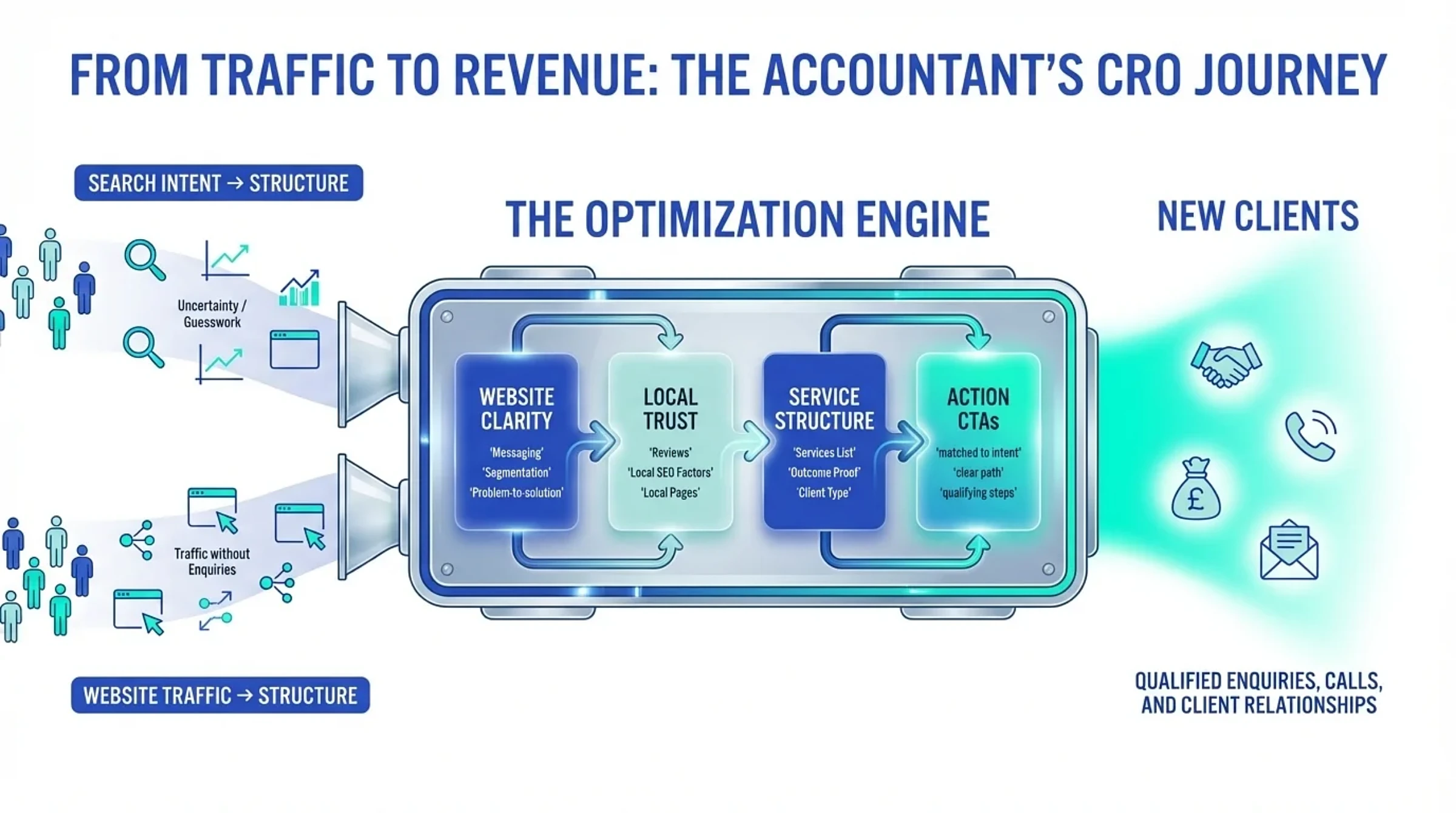
Most accountancy firms we audit at True SEO Consultants Ltd have decent service pages, average technical SEO and a backlink profile that is doing almost nothing for them. Some have hundreds of links from sites no business owner has ever read. Others have ten or twenty links from genuinely useful places, and those are the firms picking up steady enquiries from organic search. This guide explains how UK accountancy firms should actually build backlinks in 2026, which sources matter, which tactics waste budget, and how every link should connect back to the service pages that bring in clients.
Key takeaways
- The best backlinks for accountants come from finance media, local business bodies, software partners, professional referral networks and niche sector publishers.
- One relevant link from a chamber, trade body or finance title is worth more than fifty placements on PBNs or shallow directories.
- Linkable assets do most of the heavy lifting. Tax deadline guides, payroll checklists, landlord finance pages and CIS resources pull links for years after publication.
- Digital PR works well for accountants because journalists need quick, plain-English comment on tax, VAT and payroll year-round.
- Backlinks should be aimed at the pages that drive revenue. Service pages and niche sector pages need authority more than the blog does.
- Cheap link packages, paid placements and PBN networks tend to slow growth and create cleanup work later.
Book a free 30-minute audit call. We will walk you through which links are helping, which are dragging you down, and which service pages should be picking up authority.
Why most UK accountancy firms get backlinks wrong
Most accountancy firms get backlinks wrong because they treat link building as a volume game. We see practices that have spent eighteen months buying directory submissions and guest posts on irrelevant blogs, then wonder why rankings have not moved. Backlinks are a trust signal first, and a quantity signal a distant second.
Search engines look at three things when they assess a link: where it sits, who put it there, and whether the surrounding content makes sense. A link from a Cardiff chamber of commerce member page on a payroll service page tells Google that a real local body has chosen to point at a real local accountant. A link from a recipe blog with a thin author box tells Google nothing useful, and a link from a private blog network tells it something actively negative.
Our founder Mohammad qualified as an ACCA accountant before moving fully into SEO. That dual background is why we keep saying the same thing to every accountancy client we onboard, which is why our work on SEO for accountants always starts with auditing the profile before anything else.
Links are one input, not the whole answer. When a firm has respectable links and still cannot get past page two, the cause is usually somewhere else in the setup, and why is my accountancy firm not ranking works through the other suspects in the order worth checking.
What counts as a good backlink for an accountancy firm
A good backlink for an accountancy firm comes from a website with relevance, real readers and editorial standards. Relevance means the site speaks to people who hire accountants, work in finance, or run small businesses. Real readers means the page is actually crawled, visited and shared. Editorial standards means someone decides what gets published and what does not.
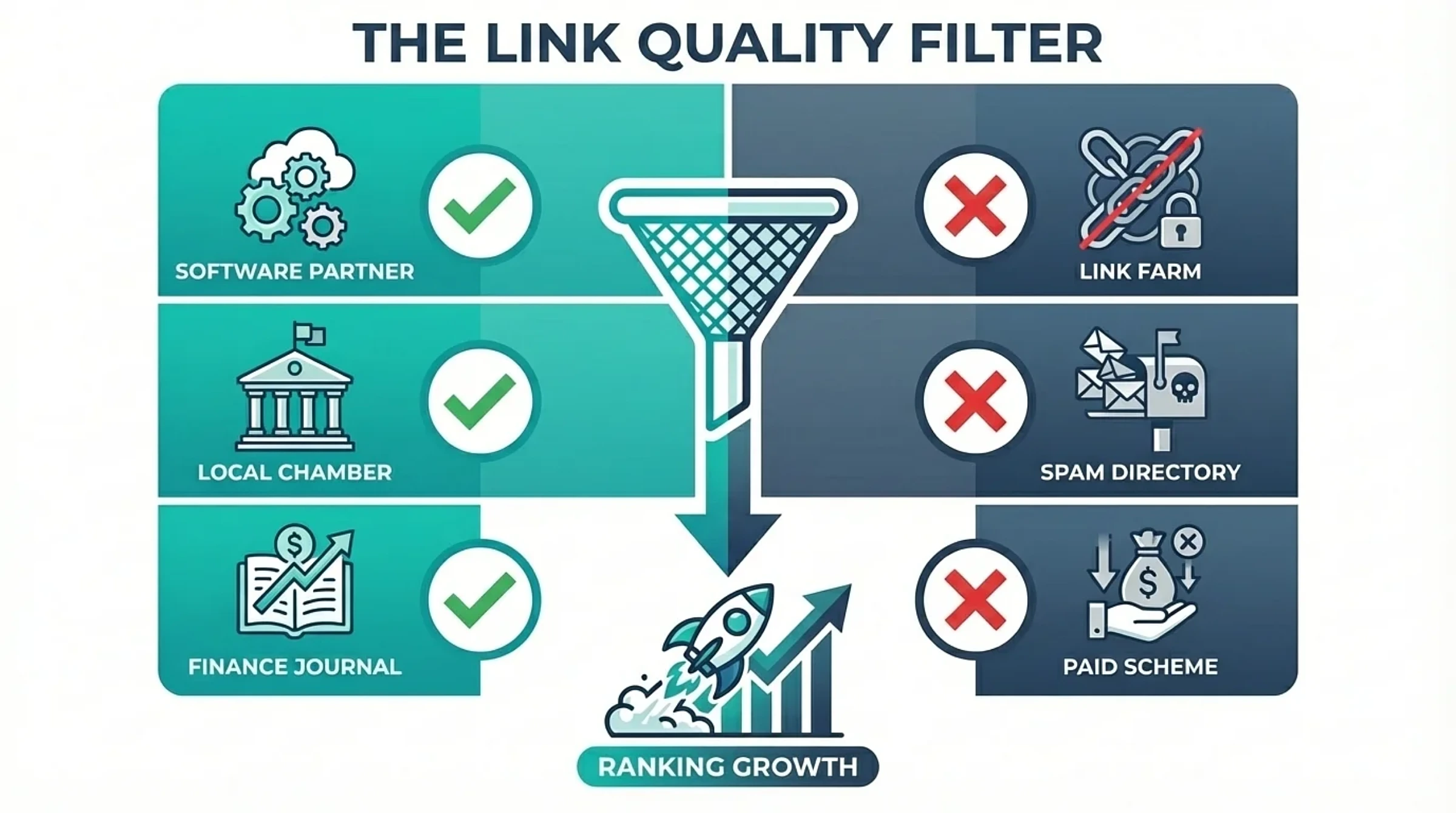
Three quick tests before chasing any link:
Industry fit
Would a business owner reading this site reasonably need an accountant? Finance media, software partners, trade bodies, sector publishers and regional business titles all pass. Generic blogs about pets or recipes do not.
Placement quality
Is the link sitting inside a useful article, a resource page, a contributor profile or a partner directory? Editorial placements carry weight. Footer links and forum signatures do not.
Referral potential
Would the link send you anyone? A mention on a property landlord blog can send landlords. A mention on a startup support hub can send founders. SEO value and lead value should overlap.
If a link passes those three tests, it is worth chasing. If it fails two of them, walk away regardless of how much the seller talks about domain authority.
Where the best backlinks for accountants actually come from
The strongest sources fall into five groups. Most firms only work two of them, which is one reason backlink profiles look thin compared to competitors who have planned the full set.
Local business bodies
Chambers of commerce, business clubs, networking groups, enterprise hubs, coworking spaces and city business journals. Credible to Google and credible to a business owner comparing firms before they enquire.
Finance and accountancy publications
Small business titles, payroll and HR blogs, software partner publications (Xero, QuickBooks, FreeAgent, Sage), bookkeeper networks and industry commentary platforms.
Professional referral partners
Solicitors, mortgage brokers, IFAs, insurance brokers, recruitment firms and payroll providers. The easiest links to win because the relationship is already warm.
Sector publishers
If your niche is landlords, contractors, ecommerce sellers, hospitality operators or healthcare professionals, sector publishers are where buyers actually read.
The fifth group is digital PR and expert quotes. Tax deadlines, payroll changes, VAT confusion and self-assessment season produce regular journalist demand. We will come back to this further down because it is the highest-leverage source most firms ignore.
What linkable content actually looks like for accountants
Linkable content for accountants is content that solves a real business problem in plain English. The site that links to you is not doing you a favour. They are pointing their readers at a page that makes their job easier. If your page does not make their job easier, the link will not come.
The formats that consistently earn links for accountancy firms are guides, checklists, calculators, templates, comparison pages, niche sector explainers and data-led pages. Each of these reduces effort for the reader. A VAT registration guide saves a startup founder forty minutes of confusion. A landlord expense checklist saves a landlord a phone call to their accountant. A CIS subcontractor explainer saves a builder reading HMRC notices for an hour.
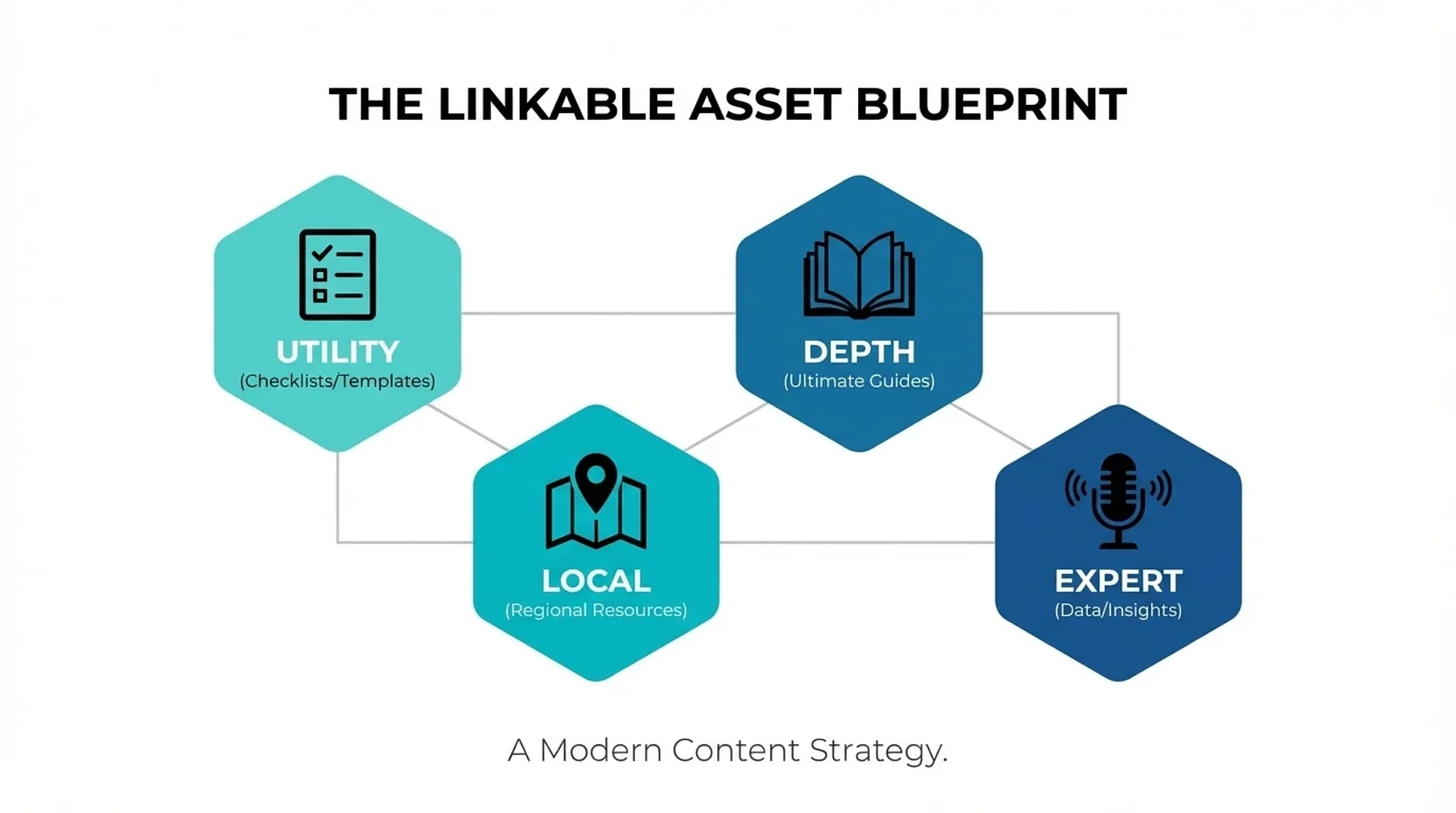
The strongest piece one of our clients has ever published was a payroll year-end checklist. We helped them structure it, layer in real examples and break it into downloadable steps. Eighteen months later it is still earning links from HR blogs, small business publications and bookkeeping forums, and it pushes authority into their payroll service page through internal linking. That is what a linkable asset looks like. A 600-word post titled “Why payroll matters” earns nothing.
The depth matters more than the word count. Shallow pages get ignored. Pages that answer the full set of sub-questions a reader has get cited.
How digital PR earns accountants their strongest backlinks
Digital PR earns accountants strong backlinks because journalists and editors need finance commentary throughout the year and have deadlines measured in hours. If you respond quickly with a clear, quotable answer, you get the mention. If you respond two days later with a technical wall of text, you do not.
The hooks repeat every year. January self-assessment. April tax year changes. VAT threshold confusion. Payroll year-end. Budget reactions. Cash flow stories after each interest rate decision. Insolvency commentary when major retailers fall over. Small business sentiment around the autumn budget. None of this is hard to predict. Most firms simply do not have a process for catching the requests.
A working PR rhythm looks like this. Track journalist request platforms daily (Responsesource, Qwoted, plus LinkedIn and X calls for sources). Have a one-paragraph expert bio ready to attach. Answer within three hours during deadline weeks. Keep replies under 150 words with one clear takeaway. Offer a sector angle if you have one, because hospitality, landlord, contractor and ecommerce angles get picked up more often than generic small business comment.
Sector angles outperform general ones. A quote on “five payroll mistakes hospitality businesses make before year end” lands more often than “five payroll mistakes small businesses make before year end”. Specificity is what makes the editor pick you over the other twelve responses sitting in their inbox.
How local SEO feeds your backlink profile
Local SEO and backlinks feed each other. The more visibly active you look in your local business community, the more local sites mention you, and the more those mentions reinforce your local search rankings. The relationship runs in both directions.
For our Cardiff-based clients we map the local opportunity in three layers. The first is business bodies: Cardiff Business Club, FSB Wales, South Wales Chamber, Cardiff Capital Region, Business News Wales, the Cardiff Council business portal, plus sector groups like Tramshed Tech and Welsh ICE. The second is local media: Business News Wales, Wales Online business section, Cardiff Times, Insider Media Wales. The third is community activity: sponsorships, speaking slots at local events, charity partnerships, university enterprise programmes.
Cardiff houses around thirteen percent of all Welsh registered businesses, which gives any well-positioned local firm a strong base to grow from. Our Cardiff SEO agency work with accountancy practices in the city is built on this exact layered approach, and the same model transfers to Bristol, Newport, Swansea and other regional cities.
Local backlinks also feed the location pages on your site. A real Cardiff page that explains the local business sectors you serve, the issues local practices see, and the firms you have helped earns local links far more easily than a thin page that swaps the place name in a template.
Partner content is the easiest link channel most accountants ignore
Partner content is the easiest link channel because the relationship already exists. Your existing solicitor, mortgage broker, insurance broker, IFA, payroll provider and software supplier all need content for their own websites. They are not link-resistant. They have the same problem you have.
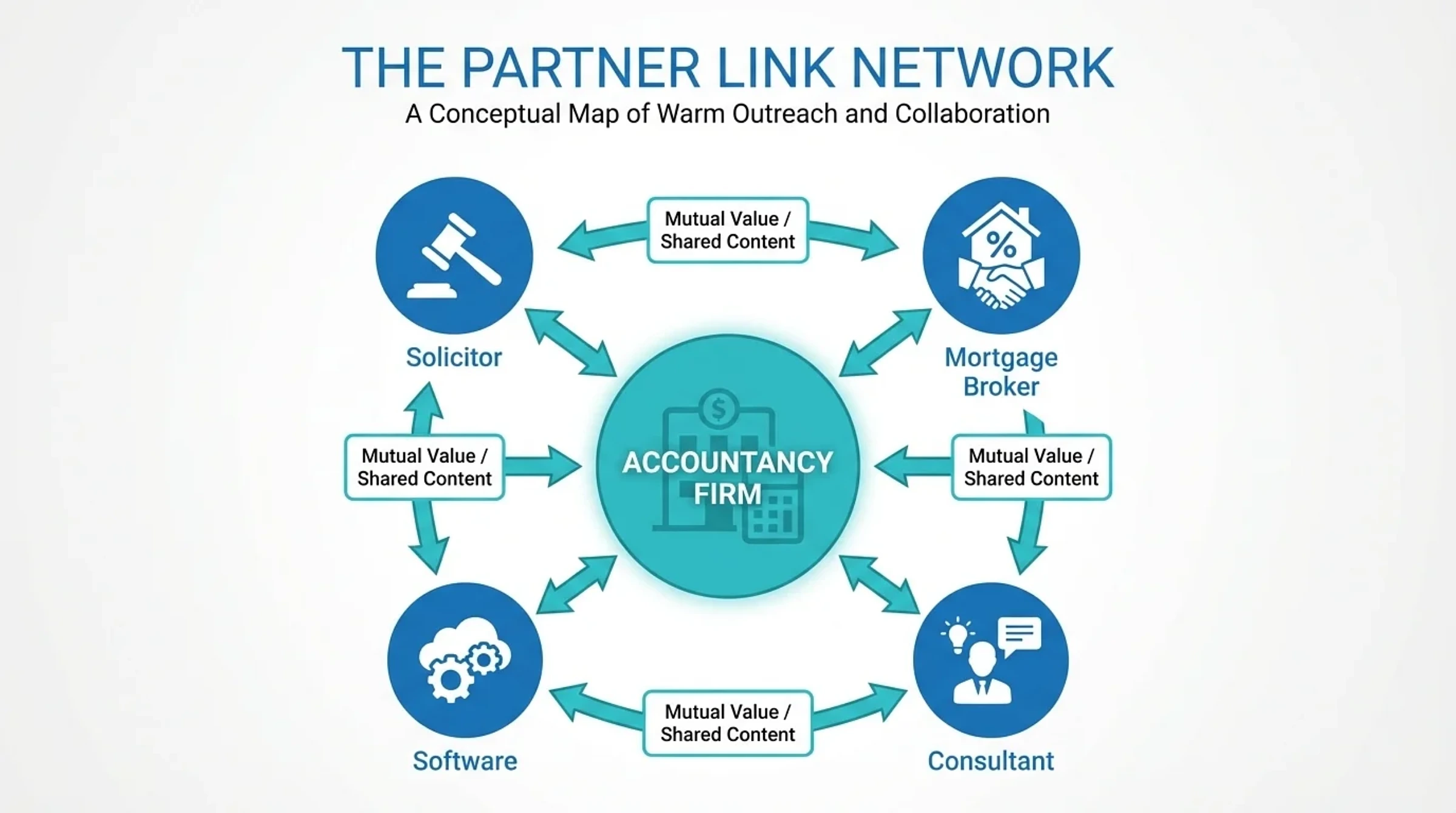
The mechanics are straightforward. Pick three professional partners who refer to you or who you refer to. Propose a joint asset that helps both client bases. A solicitor-and-accountant guide on setting up a limited company. A mortgage broker-and-accountant guide on lender-ready accounts. A payroll provider-and-accountant explainer on employer compliance for hospitality businesses. Each side hosts the asset, links to the other, and promotes it to their own list.
The result is two or three links per partner from real, relevant websites with real audiences. Compared to cold outreach, the conversion rate is roughly twenty times higher. We have built entire accountant backlink campaigns out of partner content alone, with the cold outreach budget reallocated to digital PR.
Supplier directories matter too. Xero advisor listings, QuickBooks ProAdvisor profiles, FreeAgent partner pages, and certified bookkeeper directories all carry weight when they are filled in properly with a real bio and a real link. Most firms tick the box once and forget about it. The firms that go back and write a proper profile get more from the same listing.
We will identify three warm partner opportunities and one digital PR angle ready to run inside thirty days. The 30-minute call is on us.
Tactics to avoid completely
Three tactics show up constantly in cheap “SEO packages” sold to accountancy firms and we have yet to see any of them produce durable results.
Private blog networks. A network of low-quality sites built only to host links. Easy to spot and increasingly easy for Google to discount. We have cleaned up half a dozen accountancy backlink profiles in the last two years where PBN links were the largest segment and rankings had stalled for over a year.
Mass directory submissions. Five hundred listings on dead directories no buyer reads. Local business directories with real audiences and editorial standards are fine. Mass listings on sites that exist only to host links are not.
Paid guest posting on low-quality blogs. If a site openly sells guest posts for £50, the link is worth roughly £50 of harm to your profile. Editorial guest contributions on real sites are valuable. Paid placements on link farms are not.
Exact-match anchor stuffing. Every anchor saying “tax accountant Cardiff” looks engineered. Brand anchors, descriptive phrases and natural variations create a profile that looks earned rather than bought.
If a supplier promises a fixed number of links per month at a low price point, the links are coming from one of the above categories. There is no other way the maths works.
How to measure whether your backlinks are doing anything
Measure backlinks against rankings, enquiry volume and referral traffic, not against raw link counts. A profile that grew by 200 links and produced no ranking movement is not a successful profile. A profile that grew by 30 links and lifted three service pages onto page one is.
Four metrics worth tracking monthly:
Service page rankings
Payroll, bookkeeping, VAT, tax and advisory page positions matter more than informational page positions. Track the keywords that actually bring enquiries.
Referral traffic from new links
Are visitors actually arriving? Are they reading more than one page? Are they enquiring? Traffic and engagement reveal whether the link is alive or dormant.
Branded search volume
As your name appears in more places, more people search for you directly. This is a slow lift but a meaningful one and a good sign of trust building.
Profile diversity
What share of new links are from finance, local, partner, media and sector publishers? Concentration in one source is a fragility risk worth fixing early.
We sit down with our accountancy clients every quarter and review the profile against these four. The link count is on the report. It is not the headline.
A 90-day backlink plan that actually works
A 90-day plan gives most accountancy firms time to fix the foundations, build a linkable asset and start earning real placements. It will not finish the job, because backlink building is ongoing, but it produces visible movement.
1–30
Audit and foundation
Pull the current backlink profile. Identify and disavow the worst. Fix broken inbound links. Clean up citations on the major local directories. Identify the three service pages that need authority the most and the three sector pages that should exist but do not. Pick the linkable asset you will build.
31–60
Asset and warm outreach
Build the linkable asset (a guide, checklist, calculator or sector explainer). Launch it. Send warm outreach to existing professional partners, software suppliers, local chambers and any business body you already belong to. This is where the first ten to fifteen links should come from.
61–90
Cold outreach and PR
Open the digital PR channel. Get on journalist request platforms. Approach sector publishers with the asset. Pitch guest contributions to two or three target sites in your niche. Reach out to resource pages where your asset genuinely fits. This is where months four onwards continue from.
Anyone selling a faster timeline either has a magic trick we have not seen, or they are about to sell you PBN links.
How service pages benefit from any of this
Service pages benefit when authority earned by informational pages flows into them through internal linking. The blog rarely converts. The service pages do. The point of building authority through guides and PR is to push that authority into the pages that take enquiries.
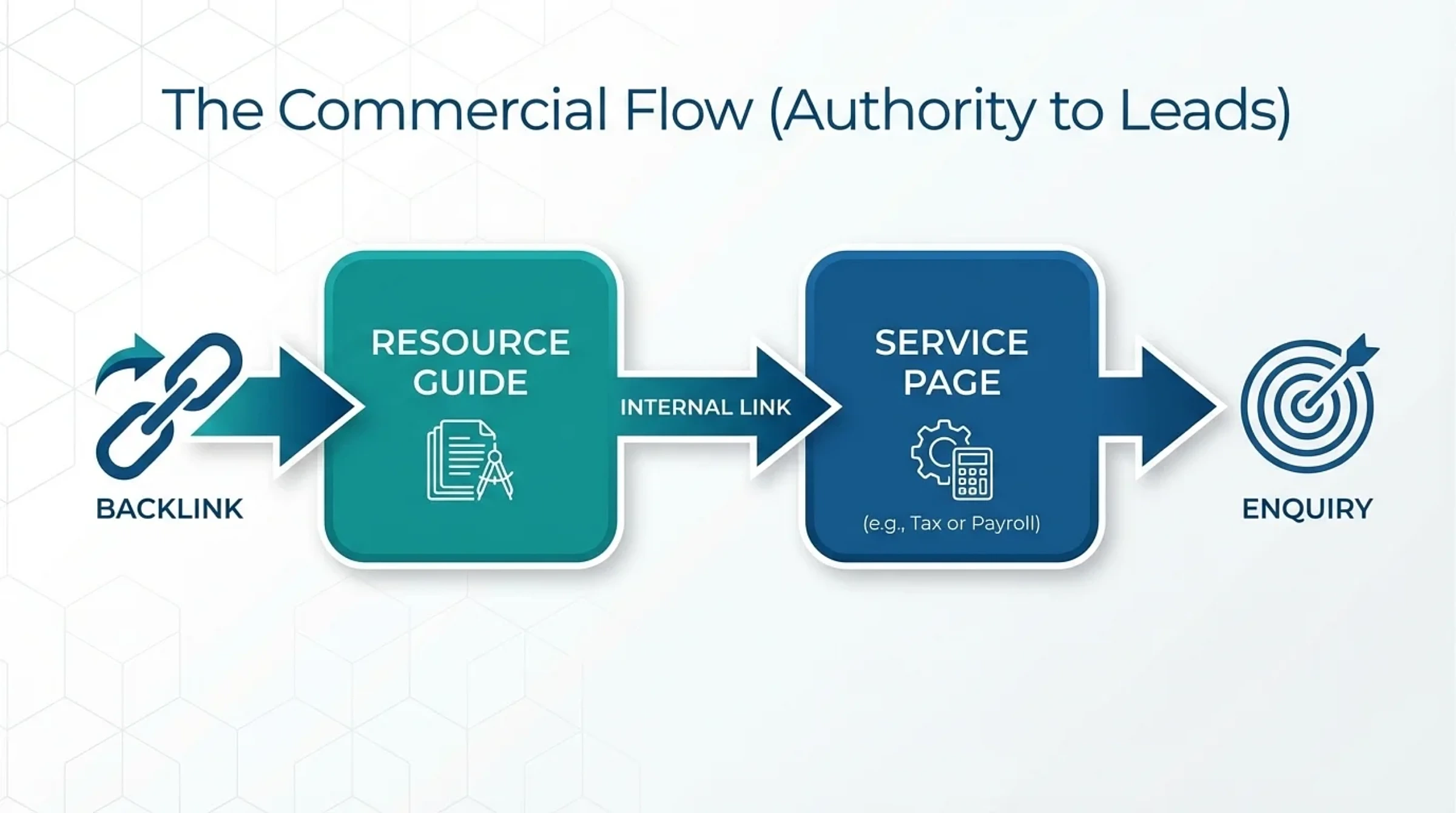
A payroll guide should internally link to your payroll service page. A VAT explainer should link to your VAT page. A landlord checklist should link to your landlord accounting page. Most accountancy firms publish content and then forget to wire it into the rest of the site, which leaves the authority pooling on pages that never convert. Our work on accountancy SEO is built around this exact flow, supported by careful research into the best SEO keywords for accountants, so that every link earned does a job on a page that converts.
Service page quality has to be there too. A linkable guide pointing at a thin service page will not produce enquiries. The guide opens the door. The service page closes the visit.
Frequently asked questions
How many backlinks does a UK accountancy firm need to rank?
There is no fixed number. A local firm targeting one city with low competition might rank with 30 to 60 strong links. A national firm targeting “online accountant UK” needs several hundred, because competitors already have them. The right answer comes from a competitor backlink gap analysis, not from a generic benchmark.
Are paid backlinks worth it?
Paid editorial placements on real publishers with editorial standards can be useful. Cheap link packages, PBN links and bulk guest posts are not. The dividing line is whether the host site has real readers and would publish the piece on merit. If the answer is no, the link will hurt more than help over time.
How long until backlinks affect rankings?
Three to six months for visible movement on competitive service terms, longer for the most contested keywords. Citation cleanup and resource page work can lift things faster. Content-led link earning takes longer because the asset has to be created, indexed and noticed.
Can backlinks replace good content?
No. Links amplify what the page already does. A weak service page with strong backlinks will sit just below page one and never break through. A strong service page with no backlinks will sit on page three. Both halves of the job have to be done.
Do we need a separate PR agency for digital PR?
Not necessarily. A specialist SEO agency with finance experience can run digital PR alongside the rest of the work and tends to do it more cost-effectively, because the angles, the outreach and the link routing are designed together. A standalone PR agency tends to win brand coverage without thinking about where the link should land.
Table of Contents
- Key takeaways
- Why most UK accountancy firms get backlinks wrong
- What counts as a good backlink for an accountancy firm
- Where the best backlinks for accountants actually come from
- What linkable content actually looks like for accountants
- How digital PR earns accountants their strongest backlinks
- How local SEO feeds your backlink profile
- Partner content is the easiest link channel most accountants ignore
- Tactics to avoid completely
- How to measure whether your backlinks are doing anything
- A 90-day backlink plan that actually works
- How service pages benefit from any of this
- Frequently asked questions