494 UK accountancy practice websites, drawn from the ACCA and ICAEW registers, measured against thirty-six faults on 1 and 2 September 2026.
Your website is probably not failing for a technical reason. It is failing because it never mentions the work you most want to sell. The commonest finding across 494 UK accountancy practices was not a broken tag or a missing sitemap. It was that 344 firms, 69.6 per cent, had no page at all for their highest-value service.
- 69.6% publish no page for the service they most want to sell, so advisory work has nothing to rank and nothing for a buyer to read
- 60.9% never state who regulates them, which is the one signal separating a regulated practice from an unregulated bookkeeper
- 50.8% run no analytics at all, so every decision about the website is opinion rather than evidence
- ACCA and ICAEW registers
- 36 measured faults
- 12 UK regions
- Published error rate
- Open licence
Research Report TSC-2026-01. The Accountancy Web Estate: a cross-sectional audit of 494 ACCA and ICAEW practice websites with measured instrument error. Published open access under CC BY 4.0 by Mohammad A Mahmud, ORCID 0009-0005-7459-212X, at doi:10.5281/zenodo.22280523.

This study was published in International Accountant, the magazine of the Association of International Accountants, across pages 21 to 23 of Issue 149, September to October 2026. AIA is recognised by the UK Government as a Recognised Qualifying Body for statutory auditors under the Companies Act 2006, and holds supervisory status under the Money Laundering Regulations 2017.
Key takeaways for a practice owner
Seven results, each with what it costs a practice that leaves it alone.
- 69.6%344 of 494 firmsThe work you most want to sell has no pageAdvisory work that exists only as a line in a list has nothing for a search engine to rank and nothing for a buyer to read. You are found for the work you would rather do less of.
- 60.9%301 of 494 firmsThree firms in five never say who regulates themThe letterhead carries it, the engagement letter carries it, the window carries it. The website does not. The signal that separates you from an unregulated bookkeeper is missing at the moment of decision.
- 50.8%251 of 494 firmsHalf of practices are flying without instrumentsNo analytics of any kind means no comparatives and no notes. Every decision about the site becomes a matter of taste, and the loudest opinion wins.
- 4% to 41%smallest to largest sitesA bigger website is not a healthier oneSuperseded tax figures rise from 4 per cent of the smallest sites to 41 per cent of the largest, and broken links from 12 to 51. Small sites fail by omission, large sites by neglect, and the wrong remedy costs you a year.
- 0% to 55%missing sitemaps by platformYour platform set your technical standard, not your developerMissing sitemaps run at 0 per cent on one platform, 15 per cent on another and 55 per cent on hand-built sites. You are paying a supplier for hygiene the platform either supplies free or never supplies at all.
- 0 of 494firms with a stated positionNobody chose what your site tells AI88 firms publish an llms.txt file, at 100 per cent on two platforms and 0 per cent on three others, which is a default rather than 88 decisions. Not one practice has expressed a position on AI crawlers, so 494 positions were taken for them.
- 20 of 36findings preventable at buildMost of this was preventable for nothingTwenty of the thirty-six findings are one line in a build specification, checkable as a yes or no at handover. Specifying an item costs nothing. Fixing the same item after launch always costs something.
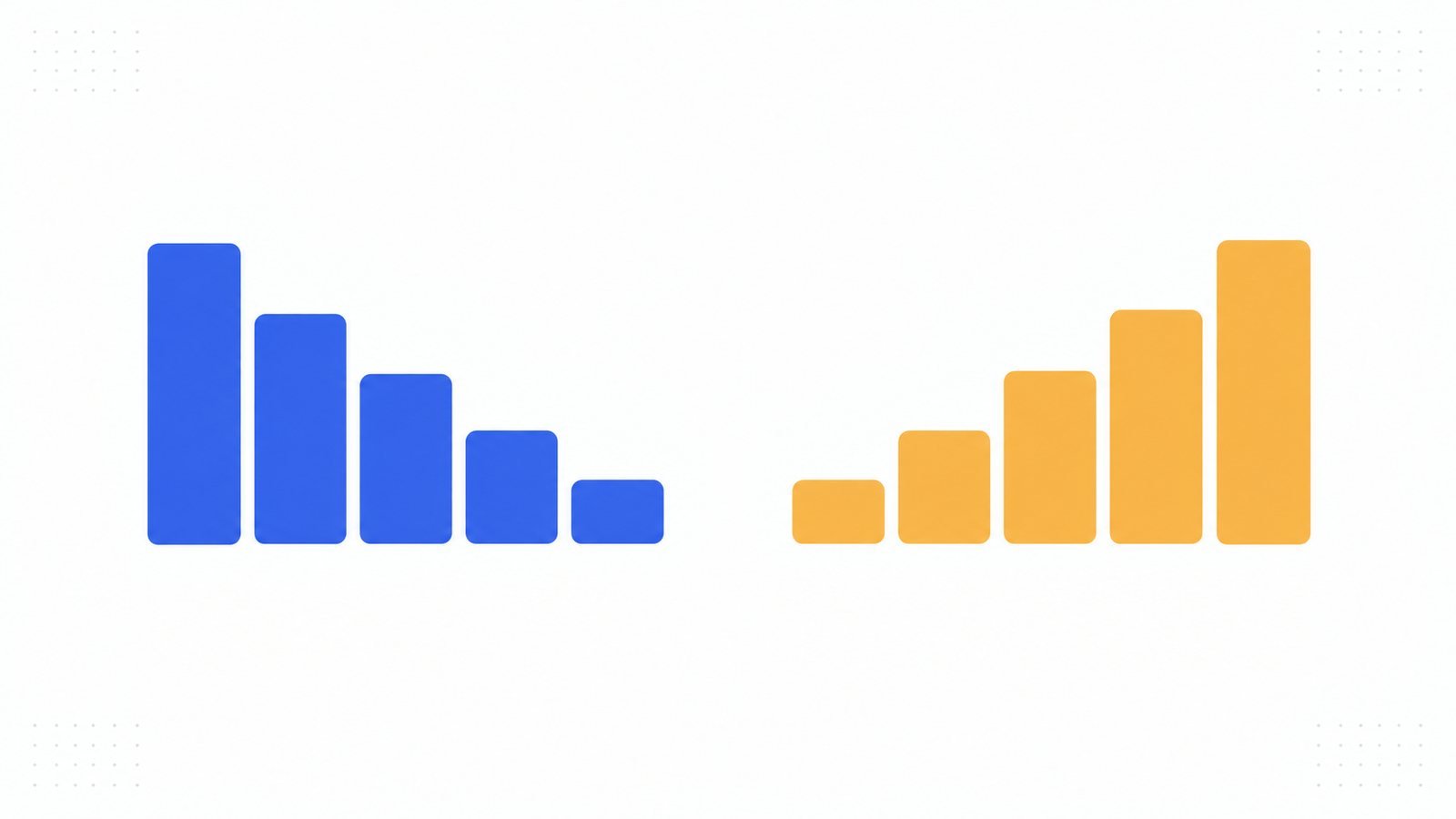
Website condition in this profession is not a scale from good to bad. It is two opposite problems that swap places as a site grows.
That is the single most useful thing the study produced for a practice owner, because it decides where your money should go before you spend any of it. Almost every fault correlates with site size, and the direction of that correlation splits the thirty-six findings into two families needing opposite remedies. A small site never built the thing. A large site built it and stopped tending it.
Measured across 494 UK accountancy practice websites, September 2026. Endpoints are the smallest and largest quartiles by page count. Research Report TSC-2026-01.
- Outcome one
Most faults were preventable at specification rather than fixable at audit. Twenty of the thirty-six findings are one line in a build brief, verified as a yes or no at handover.
- Outcome two
Platform defaults decide more of a website’s technical condition than any deliberate choice we could measure, including what the site tells AI systems.
- Outcome three
Thirty-eight of our own first 53 findings were artefacts of site size. Any audit that does not control for it produces a list of relationships that are not there.
Find out which of the thirty-six your own practice carries
Our SEO for accountants service applies this research to one practice at a time. It builds the advisory pages that do not exist yet, states the regulatory and trust signals where search engines and AI assistants actually read them, and puts one named owner on the figures that expire. You get the same thirty-six checks run against your own site, with the uncertain ones marked as uncertain.
What the study measured, and what it deliberately did not
We audited the public websites of 494 UK accountancy practices drawn from the published ACCA and ICAEW practice registers, sampled across twelve UK regions and measured with a single instrument over 1 and 2 September 2026. Thirty-six website faults were recorded per firm alongside platform, page count and region.
Two things about the method matter to you as a buyer of this kind of work.
We published our own error rate. The regulatory check runs at precision 0.89 and recall 0.76, validated blind by two raters against 213 held-out passages with agreement of 0.91. Roughly one flagged firm in nine is flagged wrongly. You will not see that admission on an SEO audit that hands you a score out of 100.
We threw away most of our first answer. Our first analysis produced 53 significant associations. Only 15 survived once we compared firms of similar site size, and two more appeared that the first pass had hidden. Had we published the first pass, most of it would have been wrong in a way no reader could have detected.
No firm is named anywhere and no compliance judgement is made about any practice. The instrument records what a website publishes. It says nothing about whether a firm meets any obligation.
Where to read it. The full 44 page report is free to download. The version of record is on Zenodo at doi:10.5281/zenodo.22280523, and the same document is also posted on SSRN. The author, Mohammad A Mahmud, completed the ACCA professional qualification examinations and holds an MSc in Applied Accounting. His ORCID iD is 0009-0005-7459-212X.
How to cite it. Mahmud, M.A. (2026) The Accountancy Web Estate: A Cross-Sectional Audit of 494 ACCA and ICAEW Practice Websites with Measured Instrument Error. Research Report TSC-2026-01, Version 4.0. Cardiff: True SEO Consultants Ltd. doi:10.5281/zenodo.22280523
Declared interest. True SEO Consultants Ltd sells SEO services to accountancy practices, and the report states that interest. The study measured websites only and recorded no traffic, rankings, enquiries or revenue for any firm.
Your website sells your cheapest work, because that is the only work it describes
The service schedule in your engagement letters carries research and development claims, share valuations and exit planning. The website carries Accounts, Tax, Payroll and Bookkeeping. Nobody can instruct you for work that never made it onto the page.
A page is the unit a search engine ranks and a buyer reads. A line in a list is neither.
Three further gaps sit in the same family, and each one stops a visitor who had already decided to act. One firm in eight publishes any price figure. Fifty-five per cent offer a free consultation and 7.5 per cent give the visitor any way to book one. Ten firms in 494 have a page explaining how a client changes accountant, which is the single objection standing between a dissatisfied business and your practice.
| What is missing | Firms | Share | What it stops |
|---|---|---|---|
| A page for the highest-value service | 344 | 69.6% | Advisory work cannot be ranked or read |
| Any named client type served | 223 | 45.1% | A searcher has nothing to match themselves against |
| Any published price figure | 430 | 87.2% | The visitor cannot self-qualify and leaves |
| Any case study or testimonial page | over 395 | over 80% | A stranger has no reason to believe the claims |
| A way to book the advertised free consultation | 457 | 92.5% | The offer is real and the mechanism is missing |
| A page explaining how to change accountant | 484 | 98.0% | The main objection goes unanswered |
Across the panel the median firm’s service titles are about half compliance work. Compliance pays the bills and caps the practice. Where the website is half bookkeeping and VAT returns, the enquiries will be too.
A service with no page has no URL to rank, no title, no headings and nothing for an assistant to quote. Search engines rank pages, not lists, so every advisory service that exists only as a menu item is a set of searches your firm cannot compete for at all.
The enquiry does not go missing. It goes to the practice that wrote the page.
Three firms in five never say who regulates them
Your website is the one place a prospect checks before handing over their books, their bank access and their identity documents, and 301 firms, 60.9 per cent, publish no regulator or supervisory statement at all.
You would not issue a report without the firm’s status under the name. The letterhead carries it. The engagement letter carries it. The window carries it. The website, for most practices, does not.
None of what follows is a compliance finding and none should be read as one. Every firm here may be properly supervised and fully insured. The website simply does not say so, which means it cannot do the work you are paying it to do.

| Statement published | Firms | Share |
|---|---|---|
| Who regulates the practice | 193 | 39.1% |
| A named anti-money-laundering supervisor | 2 | 0.4% |
| Professional indemnity insurance held | 37 | 7.5% |
| A privacy policy | 357 | 72.3% |
| An accessibility statement | 76 | 15.4% |
| Third-party tags running with no consent mechanism | 141 | 28.5% |
Two of 494 UK accountancy practice websites, 0.4 per cent, name an anti-money-laundering supervisor. This result is not a broken detector. A count of two usually means the instrument failed. Here it did not. Two blind raters read 34 candidate passages from 22 firms and found no qualifying statement in any of them. Every candidate named a supervisor for a different purpose, described the obligations without naming a supervisor, or described the supervision of somebody else. Where an instrument finds almost nothing and independent readers confirm nothing is there, the absence is the finding. No rule requires a practice to publish this, so the gap is one of disclosure rather than of compliance.
One further result belongs here because it is the sort of thing accountants notice in other people’s files. Twelve firms publish a privacy policy naming a different organisation entirely, which is an engagement letter going out with the previous client’s name still in the header.
This is an E-E-A-T gap, and it is the kind you never notice. Google assesses experience, expertise, authoritativeness and trust, and in a regulated profession the trust signal is your regulator named in text. A site that never states it fails that check silently: no error, no warning, no drop you can point at, just a ceiling on how far the page can climb against a competitor who does state it.
AI assistants apply the test harder. An assistant will not tell a user your firm is regulated unless something on the page says so, so the safe answer is to name the firm that did say so instead.
Your resource pages are quoting figures that expired
Your own profession is the audience most likely to notice, and 91 firms, 18.4 per cent, publish a superseded UK tax rate, threshold or allowance as though it were current.
That is the fault with the sharpest edge in the whole study. A page still saying the VAT registration threshold is £85,000 has been wrong since April 2024. You would find that error in a client file in seconds. On your own website it has sat there for two years, in front of the person you were trying to impress.
Two related findings run alongside it. 99 firms, 20.0 per cent, display a copyright year materially behind the current year, which is the fastest available signal that nobody has looked at the site since launch. 142 firms, 28.7 per cent, have internal links pointing at pages that return an error, against an external baseline of 21 to 23 per cent for government and news pages in the Pew Research Center analysis of link rot published in 2024.
Date every figure you publish, and give the review the same standing as a filing deadline. Where the figures are pulled from one dated source block rather than typed into twenty pages, one edit fixes all of them.
A superseded threshold fails two tests at once. It breaks the freshness signal search engines use to decide which of several similar pages is the current answer, and it contradicts published guidance, which is an accuracy problem rather than a formatting one.
The AI consequence is worse and slower to show up. Assistants do not send people to sources. They repurpose what they read and hand the answer to somebody else. A model that lifts a wrong VAT threshold from your page and gets corrected has learned that your site is not a reliable place to take a figure from, and you never see that loss, because there was never a click there to lose.
Your platform set your technical standard, and your developer mostly did not
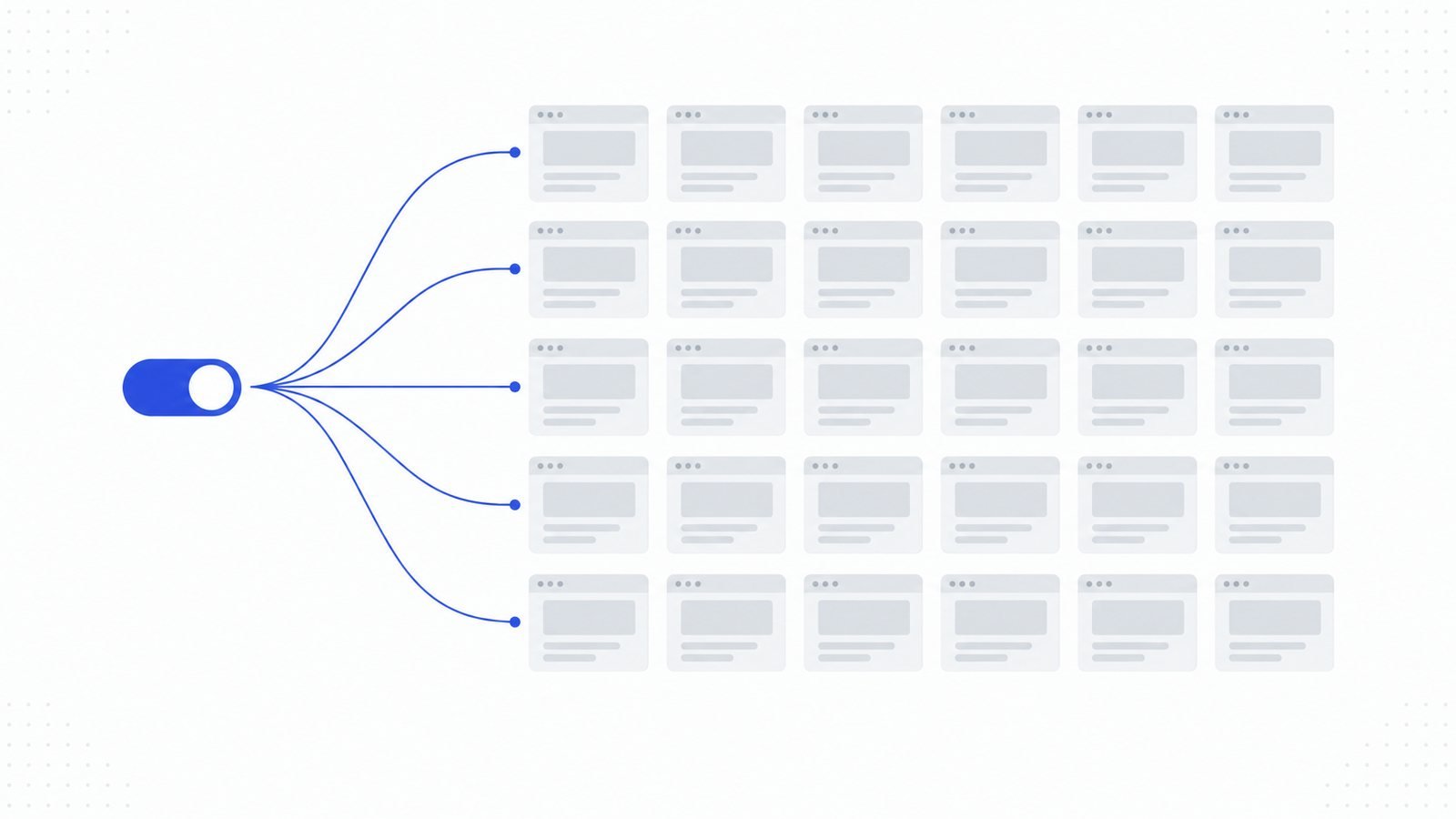
Technical hygiene in this population is a platform default rather than an achievement. Missing XML sitemaps run at 0 per cent on Wix, 15 per cent on WordPress and 55 per cent on hand-built or unidentified sites. Missing structured data runs at 5, 15 and 45 per cent across the same three.
Nobody in the history of accountancy has decided against a sitemap. It is not a decision. It is what happens when the question is never asked.
Platforms also trade one failure for another, which is why a platform choice is not a quality ranking. The platform with no missing sitemaps and almost no missing structured data carries the highest rate of out-of-date copyright years and the lowest rate of analytics.
| Finding | WordPress | Hand-built | Wix |
|---|---|---|---|
| No XML sitemap | 15% | 55% | 0% |
| No structured data | 15% | 45% | 5% |
| No page for the highest-value service | 60% | 75% | 95% |
| Publishes a superseded tax figure | 25% | 7% | 13% |
| No analytics | 43% | 58% | 79% |
| Copyright year out of date | 19% | 14% | 45% |
Four more defaults sit underneath those. 193 firms have two or more distinct pages sharing an identical title tag, which asks a search engine to choose between pages that look the same to it. 182 firms end every title with the same long brand suffix, spending half of a search result on the firm’s name. 132 firms have no H1 on the home page, usually because the headline was set as an image. 131 firms publish no structured data at all, so everything about the organisation has to be inferred from prose, and that inference is now being made by AI answer engines as well as by search engines.
Each of these removes a different part of how a search engine understands you. No sitemap leaves discovery to internal linking alone. Duplicate titles force an engine to choose between your own pages, and it may not choose the one you sell from. A missing H1 means the page never declares its subject in markup, however clear it looks to a person.
No structured data is the one that now costs most. Without it, everything about your organisation has to be inferred from prose, and inference is where an AI answer goes wrong or goes elsewhere.
Five faults, one cause: nobody owned the contact details
Five of the faults we measured are not five faults. They are one failure showing up in five places, and that is why fixing them one at a time never holds. Missing local business markup, an untappable telephone number, conflicting telephone numbers, an absent footer postcode and a missing contact page all associate strongly with one another once site size is controlled, with common odds ratios between 4.3 and 56.5.
It is the client whose address is wrong on the VAT registration, wrong on the PAYE scheme and wrong on the bank mandate. It is not three mistakes. It is one person nobody appointed.
86 firms, 17.4 per cent, publish no local business markup, so the system deciding whether you appear in a nearby search has to guess your location from prose. 24 firms carry no postcode in the footer. 18 firms publish two different telephone numbers across the site, which means somewhere a client is leaving voicemails in an empty room.
Write the firm’s name, address, postcode and telephone number once, in one place, and have every part of the site read from it.

Local ranking rests on an engine matching your name, address and telephone number consistently across the web. Five inconsistent copies of your own details are five contradictions, and an engine resolves a contradiction by trusting the entity less, which shows up as quietly not appearing in the map results for your own town.
Your website asks the visitor to do too much and gives them too little to act on
Every extra step between wanting to enquire and enquiring loses some of them, and this is where the losses are invisible because half of practices are not measuring anything.
| Fault | Firms | Share | What happens |
|---|---|---|---|
| Telephone number never marked as a telephone link | 42 | 8.5% | On a phone the number cannot be dialled |
| No identifiable call to action on the home page at mobile width | 43 | 8.7% | Mobile traffic arrives and finds nothing to do |
| Enquiry form requesting a large number of fields | 41 | 8.3% | The visitor abandons partway through |
| No dedicated contact page | 27 | 5.5% | The page a decided prospect looks for does not exist |
| Main call to action covered by a fixed overlay on mobile | 23 | 4.7% | The consent banner sits on the enquiry button |
| No telephone number published anywhere | 13 | 2.6% | Referrals told to ring you cannot |
The consent banner and the enquiry button were bought from different suppliers who never spoke. One was installed to satisfy an obligation and is now parked on top of the only element on the page that earns anything. Nobody checked them together on a real device, because the two jobs were commissioned separately and neither brief mentioned the other.
These faults do not stop you ranking. They waste the ranking you already have, which is more expensive, because the visibility was earned and then spent on a visit that could not convert.
Traffic that arrives and leaves without acting also feeds a weak engagement pattern back to the engine. With no analytics on half of practice sites, nobody sees it happen.
The build passed the only test you gave it, which was whether it looked right in a browser
Every fault in the preventable group is invisible to that test, and the evidence for it is sitting on the pages themselves. 33 firms, 6.7 per cent, still publish placeholder Latin in live pages. 21 firms show raw template placeholders, the merge field that never merged. Thirteen publish contact details that are evidently the theme’s sample data. Ten reference a development or staging address from the live site.
None of those survives a read-through. All of them survive a design review, because a design review looks at the pages somebody chose to show.
The commonest procurement route for a small practice is a fixed-price build from a contractor or a freelancer, accepted on appearance. That is the whole mechanism. A dozen checkable conditions written into the brief, with the final payment tied to them, would have removed most of what this study measured at no additional cost.
This is the finding that should change how you commission, not how you market. Most of what we measured was preventable at specification and is now only fixable at remediation. That moves the problem out of marketing, where it is usually filed, and into procurement, where you can actually control it.
Placeholder Latin and unrendered template fields are indexed like any other text on the page. They tell an automated quality assessment that the page was published without being read, and that judgement is made about the page rather than about the supplier who left it there.
Ask any supplier who shows you a correlation whether they controlled for site size
It is a fair question, it is rarely answered, and it is the single piece of quality control separating a finding from a coincidence in this kind of work.
We know that because it happened to us. Our first pass produced 53 significant associations and 38 of them dissolved once we compared firms of similar size. Website faults nearly all correlate with site size, so they correlate with each other, and an uncontrolled analysis produces a long list of relationships that are not there.
A practice acting on our first pass, or an adviser billing against it, would have directed remediation at 38 relationships that do not exist while missing two that do.
Ask the same supplier what the false positive rate of their tool is. Ours is published: roughly one flagged firm in nine on the regulatory check is flagged wrongly. That is exactly why the findings are published in aggregate and why no firm in the study is named. An audit that arrives as a score out of 100 with no indication of how often the tool is wrong is decoration.

This is the finding that saves money rather than earning it. Remediation aimed at a relationship that does not exist costs the same as remediation aimed at one that does, and produces nothing. Controlling for site size before interpreting is the cheapest quality check available in this work, and it is the question almost nobody asks their supplier.
Which of the two problems does your practice have
Work out whether your site is failing by omission or by neglect before you spend anything, because the remedies are opposite and applying the wrong one is the commonest way to lose a year.
Failures of omission become rarer as sites grow. The firm never built the thing. Naming a client type is missing on 84 per cent of the smallest quartile of sites and 11 per cent of the largest. A page for a high-value service is missing from 98 firms in every 100 in the smallest quartile against 39 in the largest.
Failures of neglect become commoner as sites grow. The firm built something and stopped tending it. Superseded tax figures appear on 4 per cent of the smallest quartile and 41 per cent of the largest. Broken links rise from 12 to 51 across the same range, and duplicate titles from 30 to 67.
A small site needs things built. A large site needs an owner and a maintenance calendar. Past roughly fifty pages, maintenance stops being something anybody does ad hoc.
What this costs you, and why we will not put a number on it
We did not measure money, so we will not quote a figure, and you should treat any monetary claim attributed to this study as fabricated, including one attributed to us. The study recorded website features. It did not record rankings, traffic, enquiry volume, conversion or revenue, and no search result was retrieved at any point.
What the data does support is an asymmetry, and you can price it yourself because you already know your own supplier rate.
| What you can measure | What the study gives you |
|---|---|
| How many faults are specification items | 20 of the 36 findings, each verifiable as a yes or no at handover |
| How common they are | Prevalence across the panel runs from 0.6% to 39.1% |
| What specifying one costs | Nothing at the margin. The page is being built either way, and the specification only decides whether it is built correctly |
| What remediating one costs | Always positive. Diagnosis, developer time, retesting and redeployment against a live system, often re-engaging a supplier who has moved on |
| What acting on an uncontrolled audit costs | 38 of 53 first-pass findings were not real. That is the measured waste |
We deliberately do not populate that with rates. Supplier day rates in this market vary by an order of magnitude, and importing a number that is not ours into an argument about imported numbers would be self-defeating. Count the specification items your own last build missed, multiply by what your developer charges to go back and fix one, and you have your exposure in the only currency that matters, which is yours.
There is one cost the study did measure, and it is a cost of analysis rather than of websites. Thirty-eight of our first 53 findings were artefacts. That is the price of acting on an audit that never controlled for site size, and it is the strongest argument in the whole study for asking your supplier how their correlations were controlled before you pay for the remediation plan.
An accountancy website is not just a website
Your website carries regulatory weight a florist’s does not, and it is judged on information accuracy by both of the systems that now decide whether anyone finds you.
Three things follow from working in a regulated profession. Your site is where a prospect verifies that you are supervised, and 60.9 per cent of practices publish nothing that lets them. Your site publishes technical figures that expire on a statutory timetable, and 18.4 per cent of practices are quoting figures that have already expired. Your site carries obligations about the data it collects, and 28.5 per cent of practices run third-party tags with no consent mechanism in front of them.
Search engines and AI assistants reward the same thing here, which is verifiable, current, structured information about a named organisation. An assistant answering a question about accountants in your town assembles that answer from what it can verify. A practice that never states its regulator, publishes no structured data and quotes a threshold that changed two years ago gives it very little to work with, and gets left out of the answer rather than argued with.
That is why an accountancy website has to be commissioned as a regulated shopfront rather than a brochure, and why the specification matters more here than in almost any other sector we work in.
What a practice owner should do this month
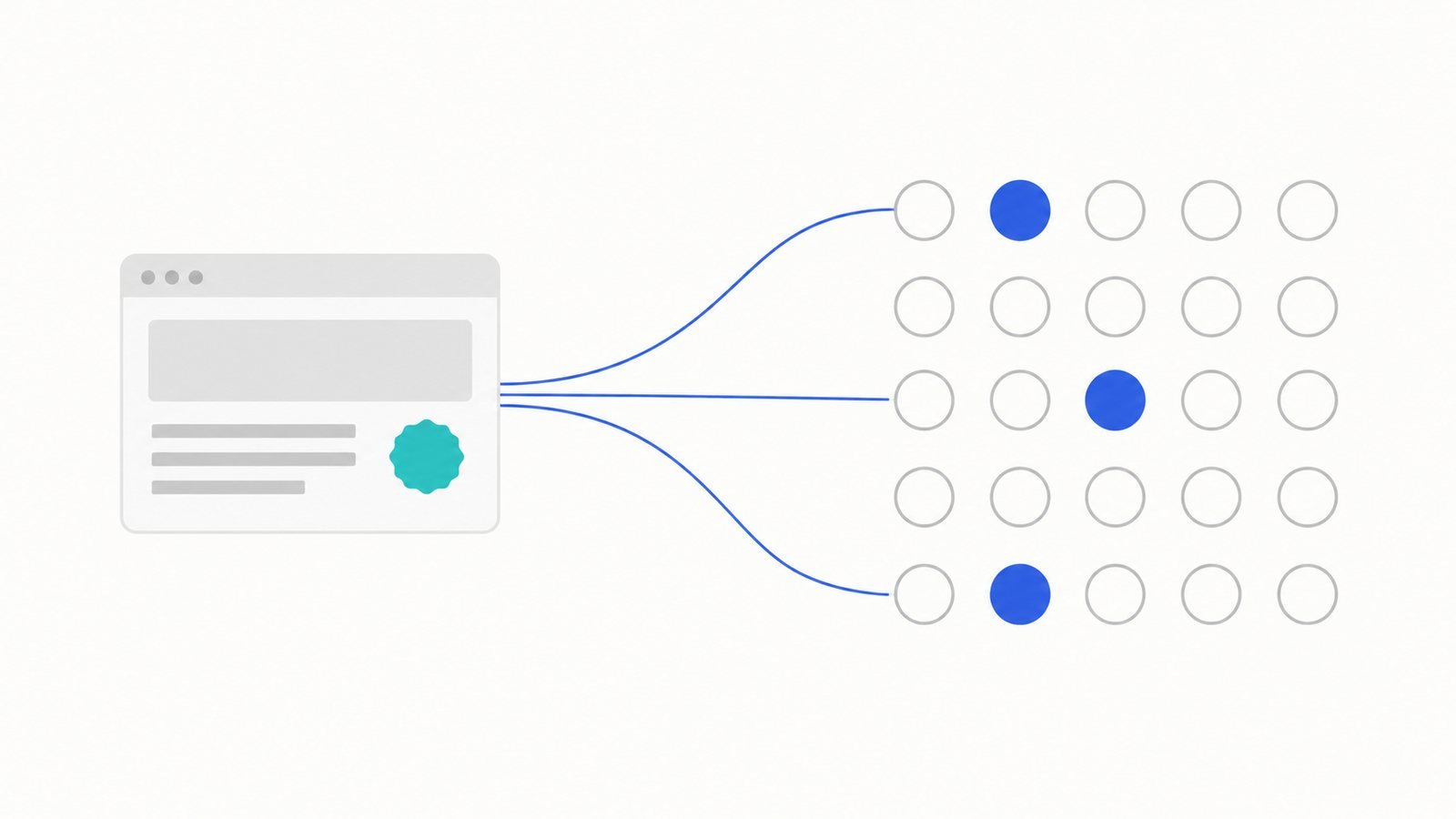
Start with four checks that cost nothing and take an afternoon between them.
- Open your own site on a phone and try to ring yourselfTap the number. Where nothing dials, the number is a picture of a number, which was true for 8.5 per cent of the panel. While you are there, check whether the cookie banner is sitting on your enquiry button.
- Search your site for every tax figure you publish and date each oneThe VAT registration threshold, the personal allowance, the dividend allowance, the corporation tax bands. Anything undated is a liability with no owner, and 18.4 per cent of practices are already publishing one that expired.
- Read your footer and your about page as a stranger wouldCan they find out who regulates you, whether you carry professional indemnity insurance, and who they would actually be dealing with. For three firms in five the answer to the first question is no.
- List your services in fee order and ask which of your top three has a pageFor 69.6 per cent of practices at least one of them does not. That is the page that decides whether you get instructed for advisory work or for another self-assessment return.
- Decide which family you are in, then apply the matching remedyA site under fifty pages usually needs pages built. A site over fifty usually needs somebody named as its owner and a review calendar with dates on it. Guessing wrong is how a year goes by without anything changing.
Frequently asked questions
How many accountancy firms were in the study and where did they come from
494 UK accountancy practices, drawn from the published ACCA and ICAEW practice registers and sampled across twelve UK regions. Reaching 494 usable firms required drawing 926 domains, because 46.7 per cent of draws could not be measured. Fifty-five register domains had no DNS record at all, and 34 of those were still registered while publishing nothing.
Does this study prove that fixing these faults increases revenue
No, and we make no such claim. The study recorded website features only. It did not record rankings, traffic, enquiries or revenue, and estimating the commercial effect would need consented analytics access for a panel of practices with matched controls and an outcome agreed before the data is seen. Until somebody runs that study, the honest position is that the commercial effect is unknown.
Is my firm named anywhere in the research
No firm in the study is named and none will be. The findings are published in aggregate precisely because the instrument has a measurable error rate, at precision 0.89 on the regulatory check, and naming individual firms against an imperfect instrument would be indefensible.
Why does it matter what my website tells AI assistants
AI assistants assemble answers about your firm from what they can verify, and 26.5 per cent of practices publish no structured data for them to read. 88 firms in the panel publish an llms.txt file addressed specifically to AI systems, and almost none of them chose to, because adoption runs at 100 per cent on two platforms and 0 per cent on three others. Not one firm in 494 has expressed any position on AI crawlers in its robots.txt.
What is the single most common fault
No page for the firm’s highest-value service, at 69.6 per cent of the panel. It is also the fault with the clearest commercial consequence, because advisory work with no page has nothing to rank and nothing for a buyer to read.
Is a bigger website better for an accountancy practice
No. A larger website has different problems rather than fewer of them. Broken links rise from 12 per cent of the smallest quartile of sites to 51 per cent of the largest, and superseded tax figures from 4 per cent to 41 per cent. Small sites fail by omission and large sites by neglect, and the two require opposite remedies.
Read the research, then have the conversation
True SEO Consultants Ltd, based at Startup Stiwdio, University of South Wales, 86-88 Adam Street, Cardiff, CF24 2FN, works with accountancy practices across the UK and onboards firms worldwide through a fully remote digital onboarding and delivery process. The study behind this page is published open access under a CC BY 4.0 licence, so you can check any figure on it yourself.
I completed the ACCA professional examinations and I now work for accountants rather than as one, which is the reason this study exists. To a web developer, a CT600 and a fractional finance director engagement are two items in the same list, set in the same font. One is a form. The other is a relationship worth many multiples of it. Nobody who has never sat in a practice sees that difference on a page, and that is why the pages get built the way they are.
Our SEO for accountants service applies everything above to one practice at a time: the advisory pages that do not exist yet, the regulatory and trust statements that are missing, the figures that expired, and the structured data that decides whether an AI assistant can name you at all.
Research Report TSC-2026-01, The Accountancy Web Estate, by Mohammad A Mahmud, ORCID 0009-0005-7459-212X. Version of record doi:10.5281/zenodo.22280523, also posted on SSRN.