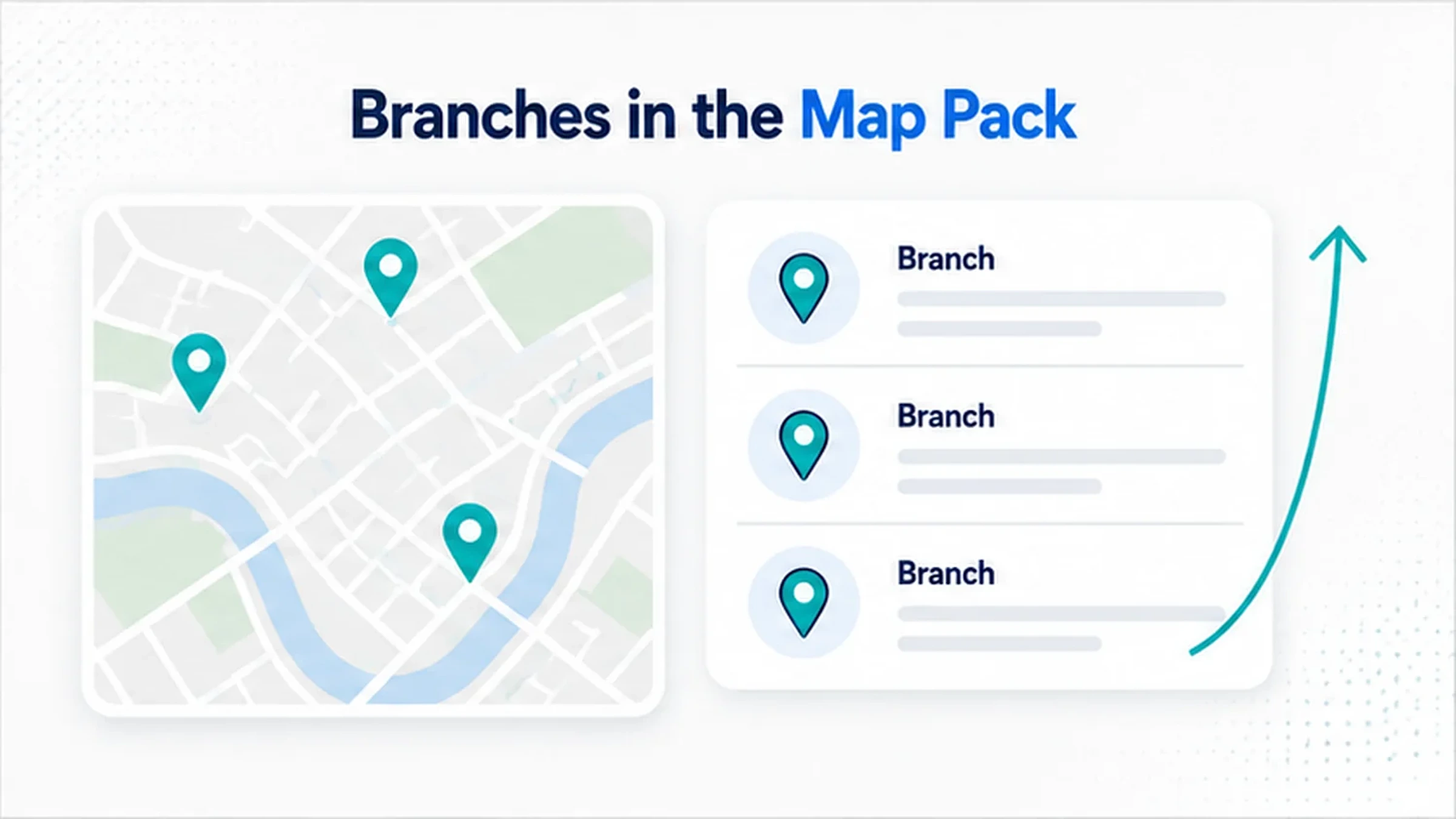
One per branch, where each branch is a genuine staffed premises with its own address. A single profile cannot rank in six towns however carefully it is worded, and the map pack is where a large share of both landlord and tenant calls begin. The caveat matters as much as the answer: profiles for addresses you do not actually occupy breach Google’s guidelines and put every listing at risk, not just the invented one.
That is the short version. The longer version is worth reading if you run more than one office, because the mistakes below are common, expensive and almost entirely invisible until somebody looks.
Why one profile cannot cover a patch
Local ranking is decided largely by proximity, relevance and prominence, and proximity is measured from a point. A single profile has one point. A searcher two towns away is further from it than an agency with an office in their town, and no amount of service-area configuration changes the arithmetic.
What you set, and what it actually decides
Service areas are frequently misunderstood here. They tell Google where an agency delivers, which affects whether it can appear at all, but they do not add a second point to be measured from. An agency covering nine towns from one office is competing in eight of them from a permanent disadvantage.
This is why the coverage question is a premises question before it is a marketing one. Where a real branch exists, the profile is the cheapest visibility an agency can buy. Where one does not, the honest route is organic: a genuinely distinct page for that town, which ranks on relevance rather than on proximity, and which is where the landlord-side searches land anyway.
What makes a branch profile eligible?
The test Google applies is whether the location is a real place of business that customers can visit or that staff work from during stated hours. Four things have to be true at once, and failing any one of them is a reason not to create the profile rather than a reason to word it carefully.
Four tests, and a branch has to pass all four
- A physical address you occupy. A mailbox, a virtual office or an hourly hot desk will not pass.
- Staffing during the hours you publish. If the hours say open, somebody is there. This is the requirement most often failed by small branch networks.
- Its own contact route. A branch number works better than a group switchboard that routes every call to one town.
- Distinct signage and presence. The premises should identify as your branch rather than as a shared building.
Where a branch fails these tests, the honest answer is not to create the profile. A suspended listing takes weeks to recover and the suspension can spread to the rest of the network, which turns a small gain into a large loss across every town you actually do occupy.
The mistakes that cost multi-branch agencies most
Four of them, and they compound. Duplicate profile text, reviews all landing in one place, every profile pointing at the homepage, and branch pages templated from head office with the town name swapped in.
Four layers, and where the visibility leaks
| Setting | What it controls | The usual mistake |
|---|---|---|
| Business name | Nothing, when it is honest. It is matched against your real trading name. | Padding it with a town or a keyword. A guideline breach, commonly reported by competitors, and usually reversed by Google along with edits you did want. |
| Address | The point every proximity calculation runs from. | Creating one at an address the agency does not occupy, which risks the whole account rather than the single listing. |
| Service areas | Whether the profile can appear for a town at all. | Treating it as a substitute for a branch. It never adds a second point to measure from. |
| Primary category | Which searches the profile is eligible for. | Setting every branch identically, when one does mostly lettings and another does mostly sales. |
| Landing page | What happens after the click, and whether the enquiry arrives. | Pointing six profiles at the homepage, which spends the strongest signal you control on the least specific page. |
| Hours | Whether the profile is eligible to show as open, and whether visitors trust it. | Publishing hours nobody staffs, which fails the eligibility test and produces a bad review from somebody who found a locked door. |
The review point deserves its own sentence, because it is the one with the largest gap between effort and return. Reviews are a per-location signal and cannot be shared between profiles. If one review request template is used across the whole agency, every review lands wherever that link points and every other branch is starved. Splitting it takes an afternoon.
What the branch page behind each profile has to do
The profile gets you into the map pack; the page decides what happens next, and it is where most agencies stop caring. A branch page templated from head office with the town name swapped in will rank poorly and convert worse.
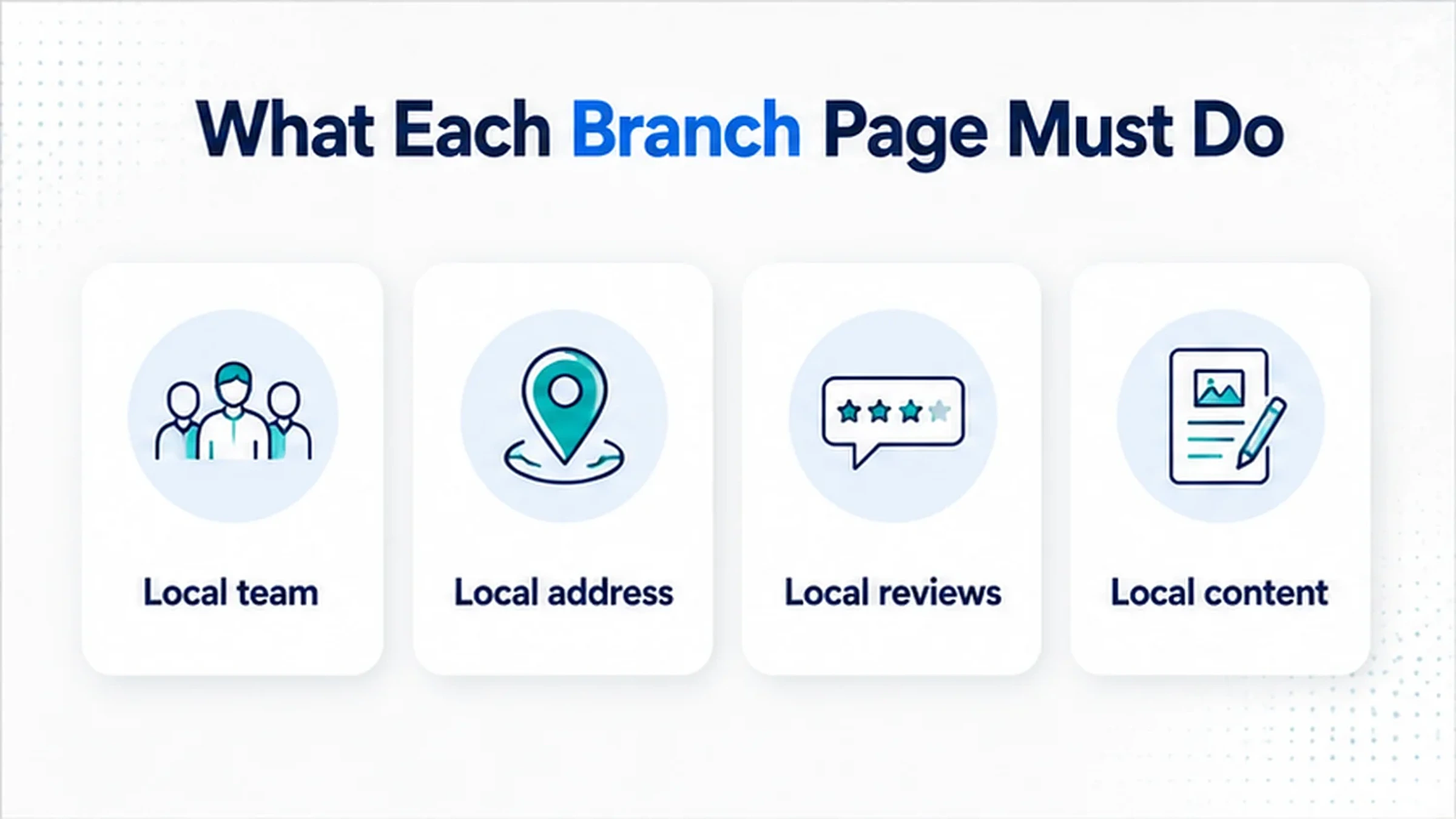
| What the page needs | Why head office cannot supply it |
|---|---|
| The areas that branch actually covers, named | Coverage differs by branch, and the named villages and districts are exactly what a local landlord searches. |
| The local authority, by name, and its licensing position | Licensing is set by council. This is the single strongest thing a local page has that a national platform does not. |
| The stock type and the landlord and tenant mix | A student patch and a family-housing patch are different businesses wearing the same brand. |
| The branch team, named, with photographs | This is a relationship business and the page should look like one. Head office photographs do the opposite. |
| That branch’s own reviews | Reviews are per location, so pulling group reviews onto a branch page misrepresents it in both directions. |
| A route for landlords and a route for tenants | They want different things from the same page, and one call to action cannot serve both. |
The wider structure question, including how to stop branch pages competing with each other, is covered on local and multi-location SEO. How it fits a lettings or property management business is on letting agent and property management SEO.
How do you keep the details consistent across dozens of listings?
Decide the canonical version once, write it down, and treat every directory as a copy of that record rather than as an independent entry. The name, address and phone number for each branch should be identical everywhere, character for character.
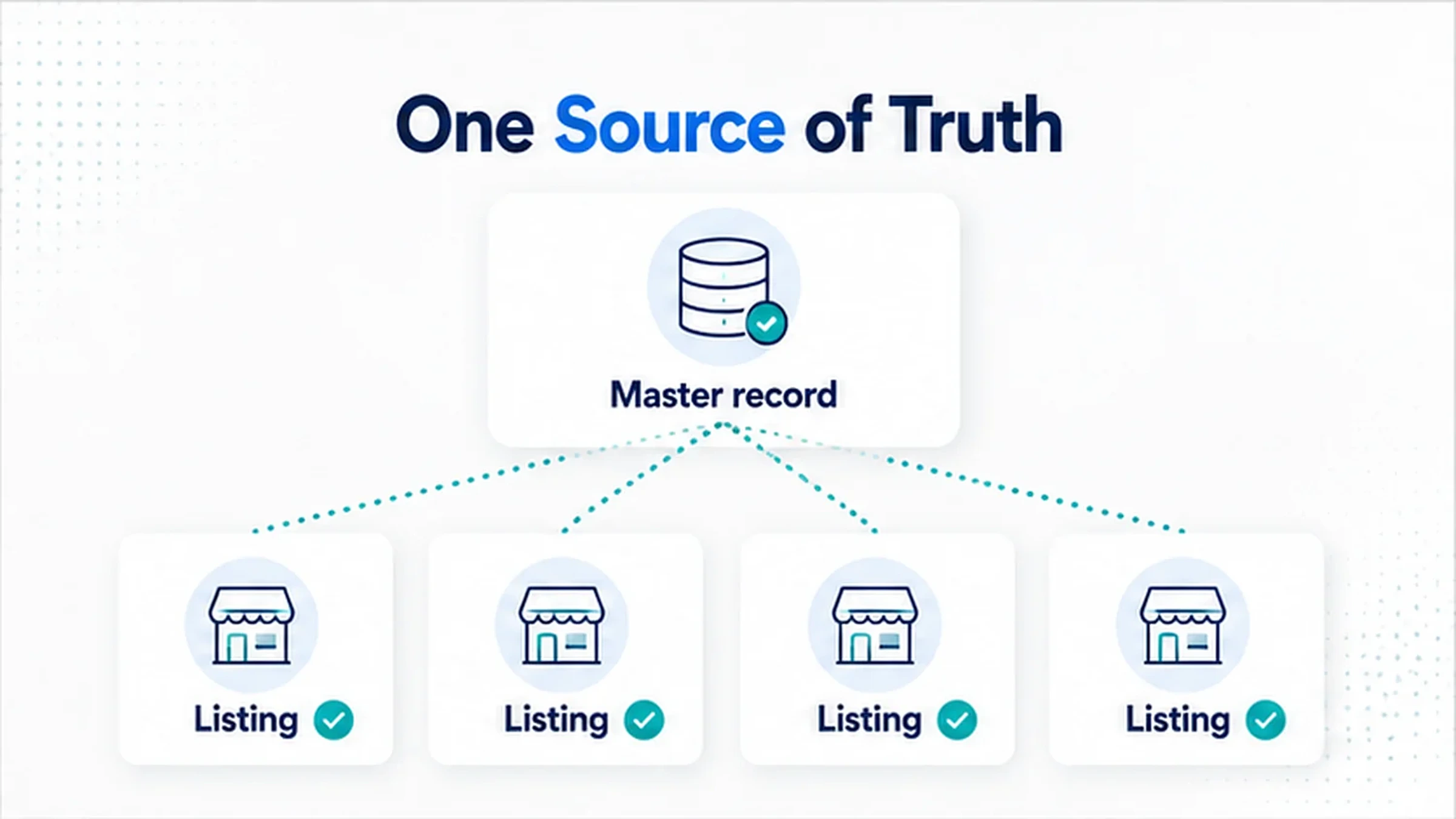
It’s the small variations that cause the trouble, not the large ones. “Street” against “St”, a suite number that appears on some listings and not others, an old phone number surviving on a directory nobody has looked at in three years: each one is trivial on its own, and together they blur the entity a search engine is trying to assemble. For a single-location business this rarely matters much. For a six-branch agency it matters a great deal, because the six records are similar enough to be confused with each other.
Keep a spreadsheet with one row per branch and one column per field, and treat it as the source of truth. When a branch moves or a number changes, the sheet changes first and everything else is updated from it. It isn’t glamorous, and it prevents a category of problem that is very hard to diagnose after the fact.
What happens when a branch closes or moves?
Mark a closed branch permanently closed rather than deleting it, and move a relocated branch by editing the existing profile rather than creating a new one. Both preserve the history, the reviews and the links the location has accumulated.
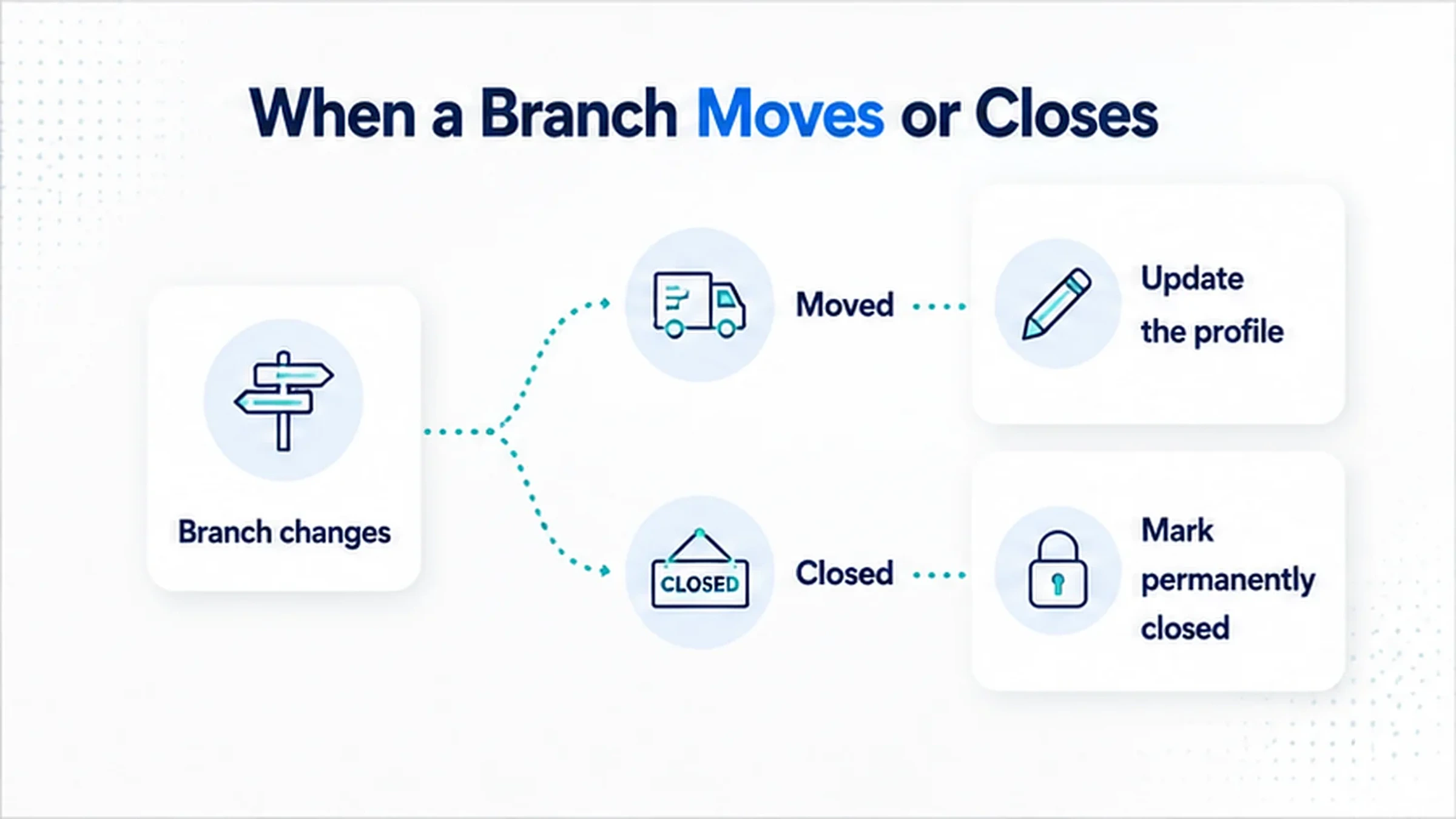
Deleting a profile throws away every review it earned; those reviews don’t transfer. A permanently closed listing keeps them, still carries the agency name, and quietly tells anyone who searches the old branch that the business did not simply vanish. It also avoids the appearance of a lapsed listing, which is what a deleted profile looks like from the outside.
On the website side, the branch page should not be deleted either. Redirect it to the branch that now covers that patch, and say on the destination page which office the work moved to. A landlord who used that branch is searching for a place that no longer exists; the agency that answers that search keeps the relationship.
Take the first month free, and count the branches that reach the map pack
The first month costs nothing. It starts with your profiles and the pages sitting behind them, branch by branch, against the eligibility tests above.
What the free month covers
- A profile-by-profile check against the eligibility tests, with the ones at risk flagged first
- Where your reviews are actually landing, and which branches are being starved by the review link
- The page each profile points at, and what it would take to make it genuinely branch-specific

First month free · a few places at a time
Your first month of SEO, free
Answer three quick questions to claim yours.
Thank you, that is with us.
We will email your onboarding form and payment link, and call within one working day if you would rather talk it through first.
Pick a time that suits you below. We will confirm by email too.
Answer the four questions and the reply starts with your profiles, branch by branch, against the tests above. The terms of the free month sit with the form.
Common questions
We work from home and cover four towns. What should we do?
Run a single service-area profile with the address hidden, and be honest about it. Do not create profiles at accommodation addresses or at properties you manage. Where you cannot compete on proximity, the winnable ground is the landlord question content and the organic town pages, neither of which depends on having an address in the town. Plenty of small agencies grow this way.
Can we use a serviced office to get a profile in a new town?
Only if you genuinely occupy it and staff it during your stated hours. A desk you have never sat at is exactly the case Google’s guidelines exclude, and competitors in a small market do report each other. The risk is not limited to the new listing: suspensions can affect the whole account. If you are opening in a town properly, the profile is fine. If the office exists to obtain a profile, it is not.
Should the agency name include the town?
Only if it is genuinely part of the registered or trading name. Adding a town or a keyword to a profile name to improve ranking is a guideline breach and one of the most commonly reported. It also tends to be reversed by Google eventually, sometimes along with other edits you did want. Put the town in the page title and the branch page instead, where it belongs and where it is allowed.
How do we get reviews onto the right branch?
Give each branch its own review link and make sure the person asking is the person who did the work. Most misallocation comes from a single review request template used across the whole agency. Splitting it takes an afternoon and is one of the highest-return jobs available to a multi-branch agency, because reviews are per location and cannot be shared.
Two of our branches are three miles apart. Will they compete with each other?
In the map pack, rarely, because Google usually shows one result per business for a given search. On the website, frequently, and that is the version that costs you. Two branch pages both claiming the same town is the most common self-inflicted ranking problem in a branch network. Give each page a defined and different patch, name the areas explicitly, and link them to each other so the relationship is clear rather than competitive.
Do we need a separate profile for lettings and for sales at the same address?
Only where they are genuinely separate businesses with separate entrances, staff and contact routes, which is unusual. Two profiles at one address is one of the fastest routes to a suspension. The better answer is one profile with the primary category set to whichever side of the business is larger, the other side added as a secondary category, and separate service pages on the website carrying the split.
More on winning landlord instructions
- What landlords search before they change letting agentThe five stages a landlord moves through before they ever ring an agency, and the four of them that are questions rather than shopping.
- Does Propertymark or RICS membership help an agency rank?Accreditation is not a ranking factor. What it is instead, and why a logo in the footer does none of the work the words would do.
- What the Renters’ Rights Act changed about how landlords choose an agentThe reforms commenced on 1 May 2026. What changed, how landlord searching shifted with it, and which pages are now describing a regime that has gone.
- Why agents rank below Rightmove and ZooplaThe four advantages the portals hold that no agency can close, and the searches where they barely turn up at all.